
“Andrés, do I need an $800 rod?” “Should I bring my own waders?” “What line weight should I use?”
Patagonia doesn’t care what brand is on your rod. What matters is that you understand your fishing equipment and know how to use it. That said, making the right choices in your setup can make a real difference on the water — and that’s exactly what we’re here to break down.
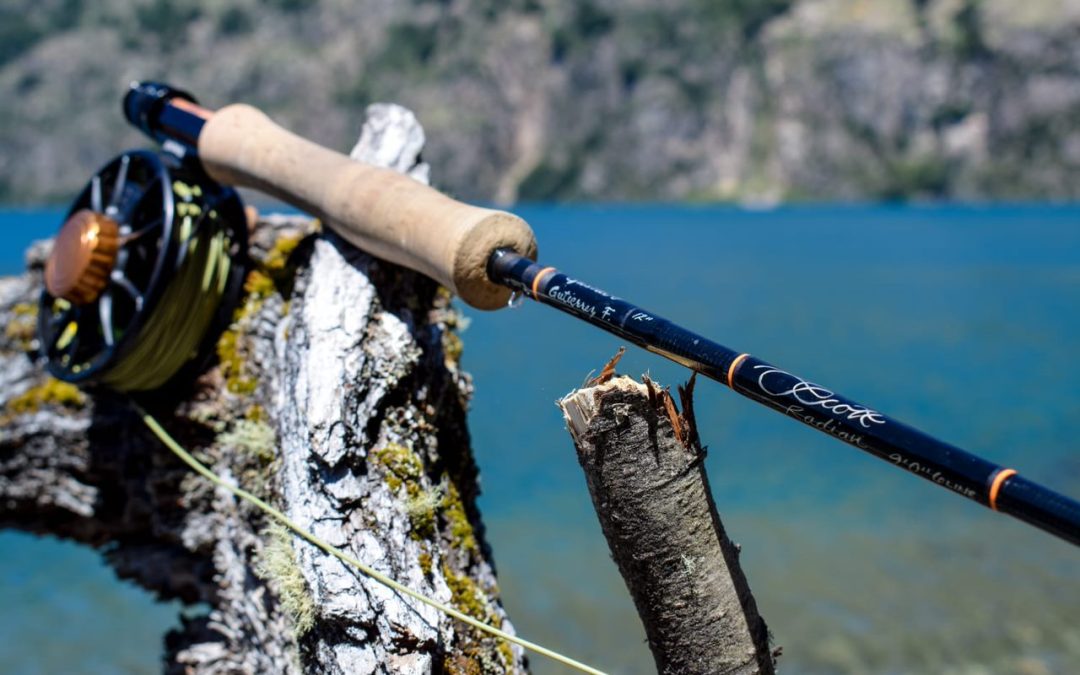
A lot of information online points to a 5wt as the standard Patagonia rod. The truth is different: the all-around rod for these waters is a 6wt. The style of fishing we do here — big terrestrials, heavy dropper rigs, and constant wind — demands it. A 5wt still has its place for wade fishing smaller streams and delicate dry fly presentations, but if you’re only bringing one rod, make it a 6.
FISHING EQUIPMENT AND THE MYTHS ABOUT IT
MYTH #1: “I NEED A $500+ ROD TO FISH WELL”
False. Completely false.
Does a better rod make a difference? Yes. But not between fishing well and fishing poorly — the difference is between comfortable and uncomfortable, and between a rod built for general use versus one optimized for something specific like streamer fishing. A medium-fast action rod covers the vast majority of situations you’ll face out here, except in scenarios that call for specialty lines and high-volume flies.
An Orvis at $300 casts just as well as one at $1,000. A TFO at $250 performs right alongside a $400 rod. The differences come down to weight, feel, and aesthetics — not results. What truly matters is knowing exactly what you’ll use the rod for, and pairing it with the right line for the job.
What actually counts: a rod that lets you cast 40–50 feet comfortably, doesn’t beat up your shoulder, and has the right action for the type of fishing you plan to do.
Our recommendation: if it’s your first trip, bring something in the $200–300 range. Don’t overthink the expensive options. Learn the technique, get comfortable, and upgrade later if you want something more refined.
MYTH #2: “I NEED A REEL WITH A POWERFUL DRAG”
This is where a lot of anglers genuinely get it wrong. The reel doesn’t fish. The reel holds line.
For the type of fishing we do, the reel is simply not the priority. A mid-range drag that’s reliable and doesn’t fail is all you need — nothing more. Now, if you’re chasing salmon, that’s a different conversation and a stronger drag becomes relevant. But for trout, reliability beats raw power every single time.
What you need:
- Solid, durable construction
- Consistent drag (not “silky smooth” — just consistent)
- Capacity for your line, ideally large arbor
- That’s the whole list
- A Lamson at $180. A Redington at $200. An Orvis at $250. All of them work. The differences are weight and feel, not performance.
- What we actually worry about: maintenance. If it’s a used reel, make sure it’s been cleaned. That’s the entire checklist.
MYTH #3: “I NEED EXPENSIVE WADERS”
This is where comfort becomes real — and where the wrong call can genuinely ruin a day on the water. Cheap waders fail fast and make you sweat through every hour of fishing. Decent waders last for seasons and keep you fishing well into the afternoon.
But here’s the truth: you don’t need the top-of-the-line brand. You need good breathable waders. Simms, Patagonia, Orvis — yes, they perform. But so do Redington, Frogg Toggs, and solid mid-range options. The same principle applies to your rain jacket: staying dry is the difference between a great day and a miserable one.
The real breakdown:
- Premium waders: last many seasons
- Mid-range: 3–4 seasons of solid use
- Budget: variable — sometimes one season, sometimes more
If this is a one-time trip, bring whatever you have. If you plan to fish Patagonia regularly, invest in something mid-range — you don’t need the flagship model. And if you’d rather skip the wader investment altogether, we have a full selection available.
Our advice: chest-high breathable waders in the right size. Whether they cost $300 or $600, both keep you dry.
What actually matters here: your boots. Rubber soles work, but our rivers are slippery and felt consistently outperforms rubber in these conditions. Metal studs and cleats are not permitted on the boats. If you don’t have felt-sole boots, we can provide them — safety on the water is non-negotiable.
MYTH #4: “I NEED AN EXPENSIVE FLY LINE TO CAST WELL”
This is where the money genuinely makes a difference. A quality line feels right from the first cast. A mediocre line behaves oddly, doesn’t turn over the leader cleanly, and in the case of sinking lines, simply doesn’t get down the way it should.
Since this comes up constantly, we’ll skip the theory and go straight to what we recommend. Our go-to lines for a 6wt are the Scientific Anglers MPX for floating and the SA Sonar Cold 200 grain for sinking. For days with extreme wind, the Rio Outbound Short or the Orvis Power Bank are excellent additions.
There are dozens of taper options available today, and with experience you can dial in your personal preferences. But the bottom line for Patagonia is this: you need aggressive-taper lines built to handle the conditions out here.
The two lines that cover almost everything:
- Aggressive weight-forward floating line for terrestrials and dropper rigs ✓
- Fast sinking line (200-grain), shooting head style, for streamers ✓
MYTH #5: “ROD WEIGHT DOESN’T REALLY MATTER THAT MUCH”
Simple and direct: if you’re bringing one rod, make it a 6wt. A 5wt is recommended in many general guides, but it is genuinely not enough to handle the wind, cast big foam terrestrials, or manage heavy dropper setups out here. A fast or medium-fast 6wt is where the real advantage lives.
The same goes for dropper fishing — a 5wt will fight you on every cast. That said, if you already own a 5wt, bring it as a secondary rod for wade fishing and smaller flies. It shines in the right situations and makes a great complement.
Rod action matters too. A slow-action rod is not ideal for our waters. Medium-fast to fast is the range to be in. A slow rod can work, but it demands significantly more effort and technique to be effective.
Solid mid-range rod recommendations:
- TFO LK
- Orvis Recon
REALISTIC FISHING EQUIPMENT FOR PATAGONIA
If you’re bringing your own setup, here’s what actually matters. And if you don’t have it — don’t let that stop you. We’ve got you covered.
ESSENTIAL:
- 6wt rod, medium-fast to fast action
- Mid-range reel with spare spool
- Breathable chest waders
- Wading boots without metal cleats
- Floating line + sinking line
- Quality polarized sunglasses in light tints (brown or yellow)
- Good waterproof rain jacket
RECOMMENDED:
- 5wt as a secondary rod for small streams and wade fishing
- 7wt for dedicated streamer days
THE UNCOMFORTABLE TRUTH
The best investment you can make is not in gear. It’s in experience.
A good guide will do more for your casting than any rod upgrade ever could. A great day on the water with someone who truly knows the river is worth more than $1,000 of new equipment — and they’ll help you understand exactly what’s working in your setup and what needs to change.
That’s why we include full equipment in our programs. We don’t want you spending money on gear. We want you here, fishing, and leaving already planning your next trip.
THE BOTTOM LINE
In Patagonia, you can fish with any rod. Expensive or budget. Brand new or ten years old. Perfect technique or a work in progress.
What matters is being here. What matters is the river. What matters is that moment when a big trout rises to eat your fly.
We’ll be right there when it happens — and we’ll have everything you need to make it unforgettable.
Gear is just what gets you to that moment.